
shuixingfensanji1
shuixingfensanji2
shuixingfensanji3
shuixingfensanji4
shuixingfensanji5


PRODUCT INTRODUCTION
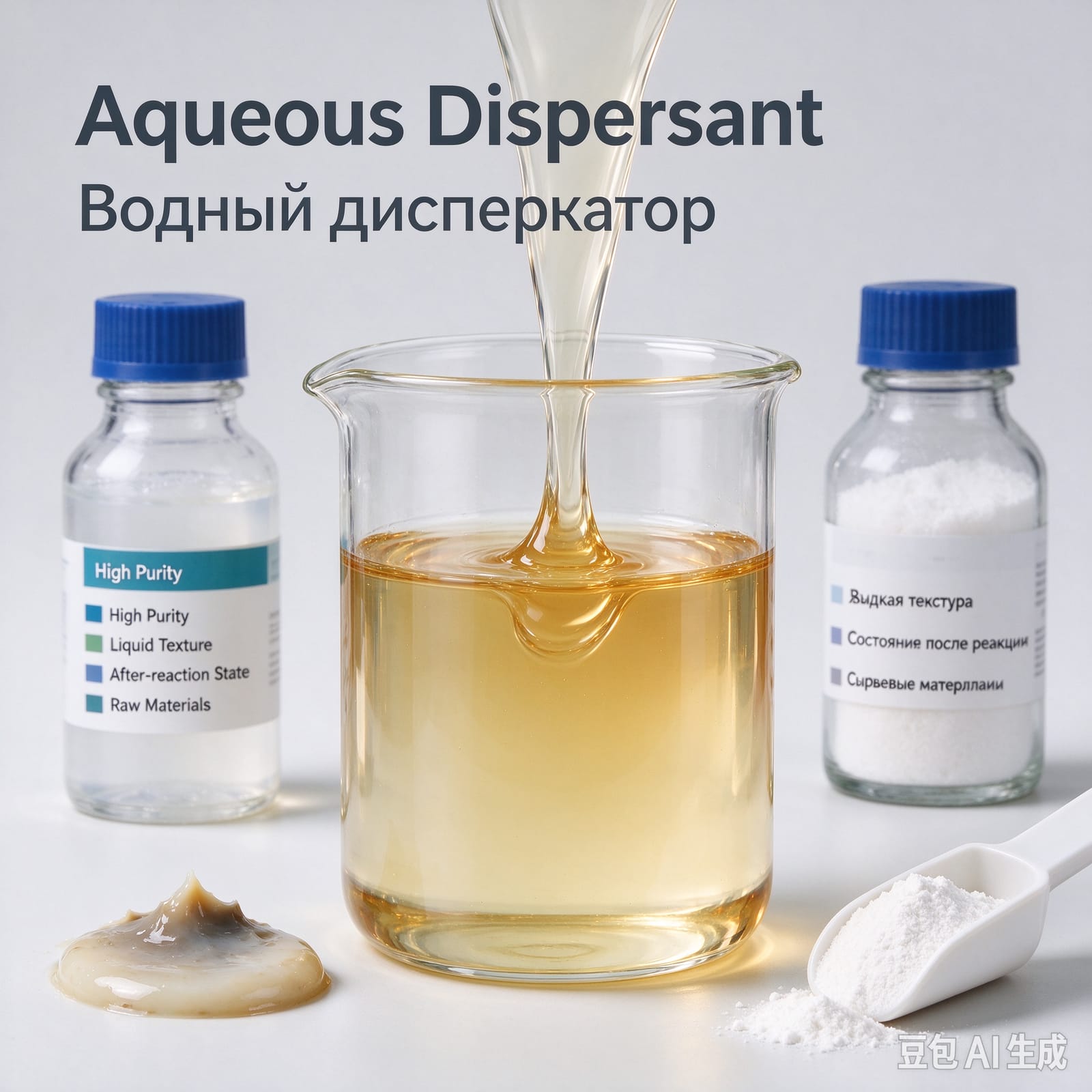
Water-based dispersant is a low-viscosity surfactant copolymer designed for aqueous systems. It stabilizes solid pigment, filler and powder particles by electrostatic repulsion and steric hindrance, preventing flocculation and sedimentation. It effectively reduces slurry viscosity, improves grinding efficiency and enhances color development, gloss and storage stability of finished products.
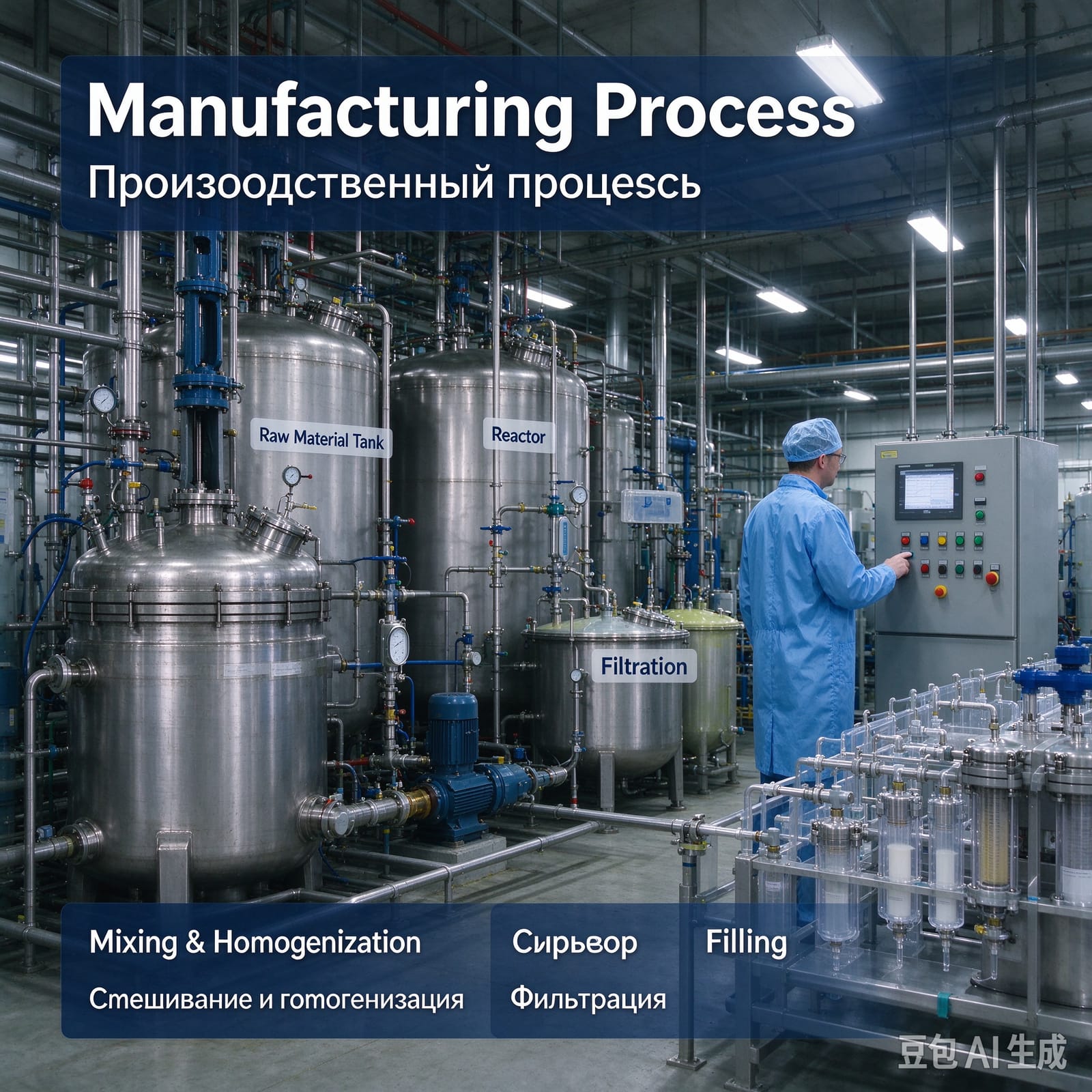
Our series includes anionic, non-ionic and multi-functional composite grades. It has good compatibility with thickeners, defoamers, wetting agents and film-forming additives. The product is low-odor, environment-friendly and free of heavy metals. Our technical team supports formula adjustment according to customer’s raw materials, grinding equipment and end-product standards, widely serving coating, ink, ceramic and water treatment industries.
SPECIFICATIONS & TECHNICAL DATA
| Item | Typical Index |
|---|---|
| Appearance | Light yellow / pale amber transparent liquid |
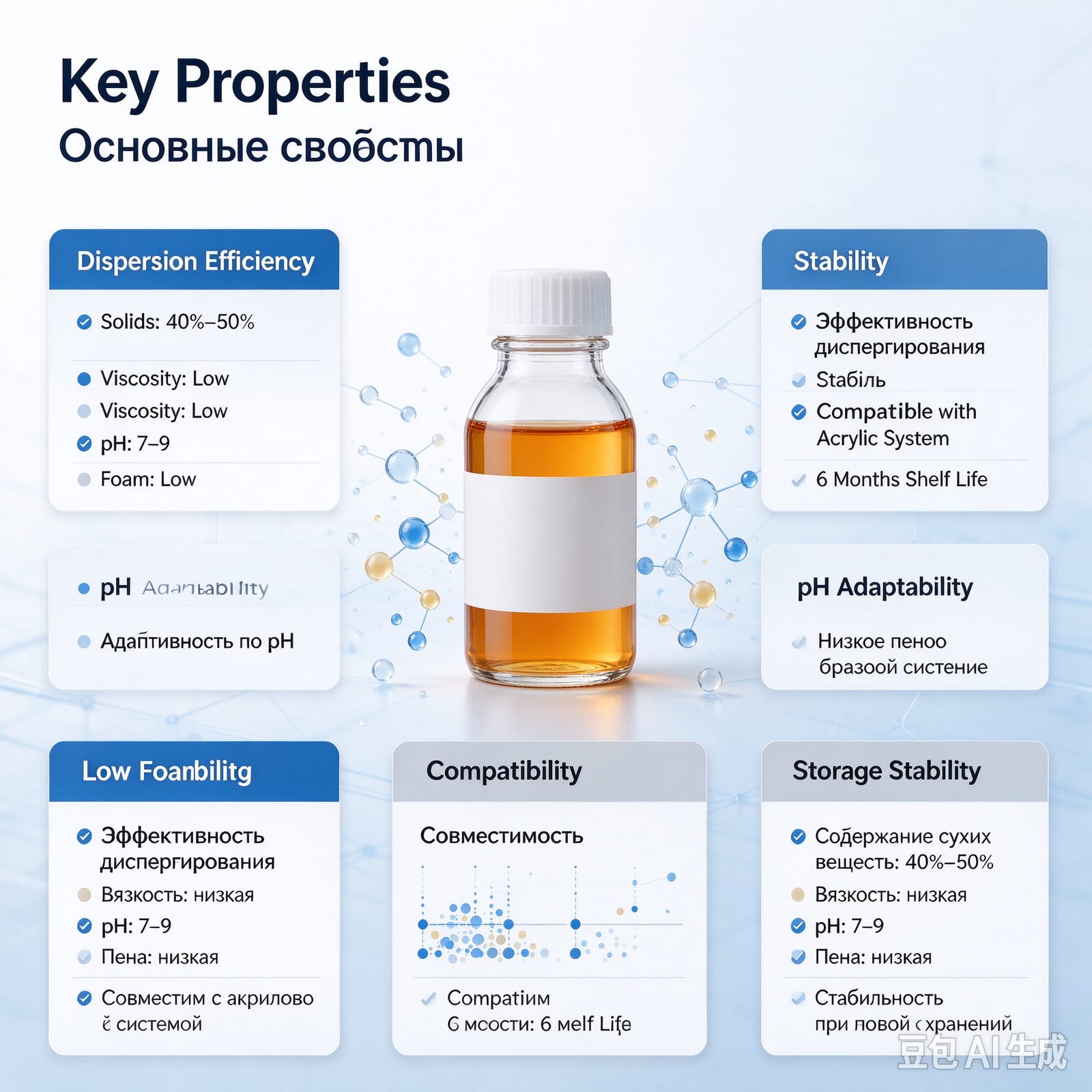
| Solid Content | 40% ± 2% |
| pH Value (10% solution) | 6.0 – 9.0 |
| Viscosity (25℃, mPa·s) | 50 – 400 |
| Ionic Type | Anionic / Nonionic / Composite |
| Cloud Point | > 85℃ (nonionic grade) |
| Compatibility | Compatible with most water-based resin systems |
| Storage Stability | 6 months sealed at 5–35℃, avoid freezing |
APPLICATION FIELDS & END PRODUCTS
APPLICATION FIELDS
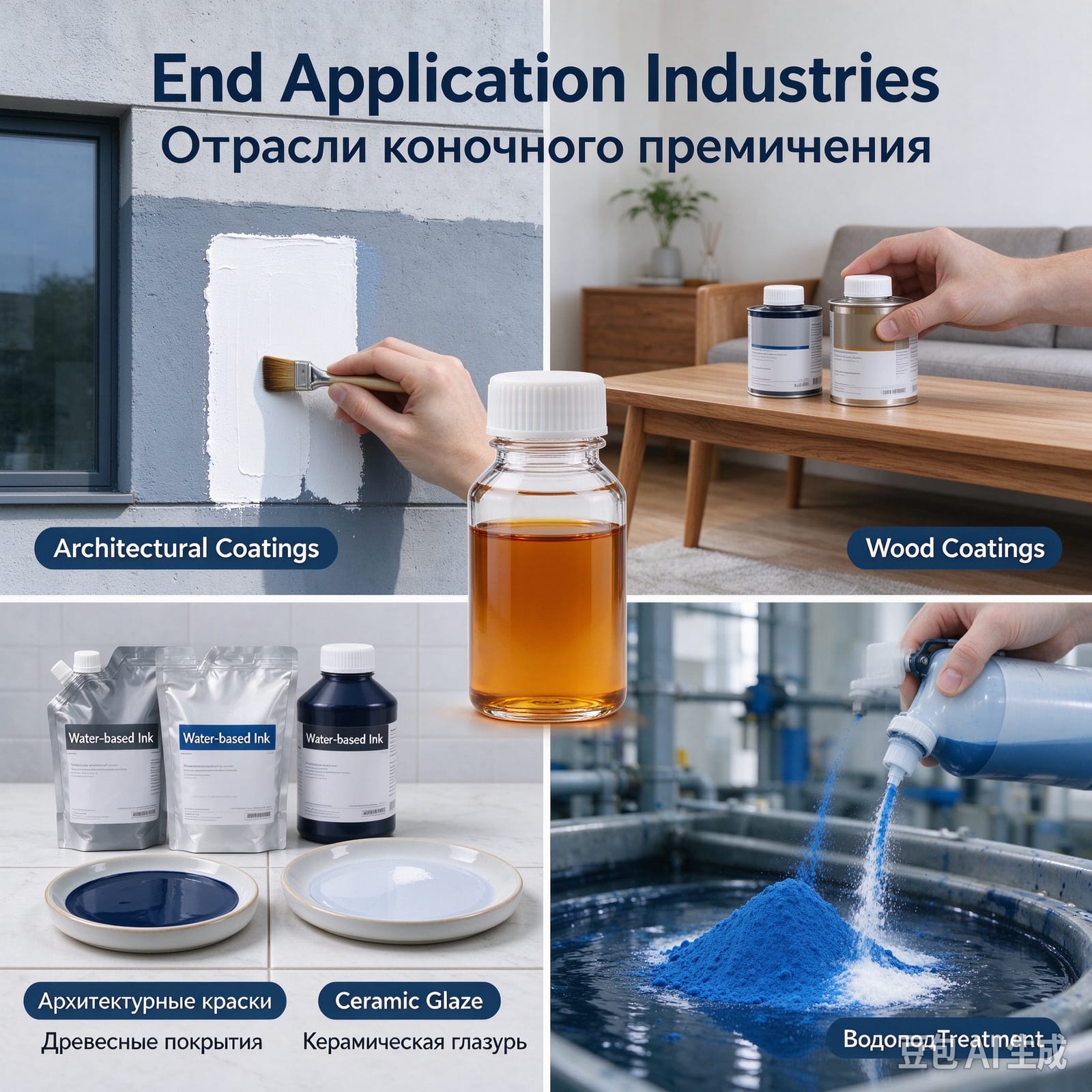
Water-based architectural coatings Disperse titanium dioxide, fillers and pigments
Water-based ink industry Improve color strength and anti-settling property
Ceramic slurry Reduce slurry viscosity for smooth casting
Paper coating Optimize coating fluidity and gloss
Water treatment Disperse suspended fine particles
Textile printing paste Stable pigment dispersion
END PRODUCTS
Latex wall paint, water-based industrial coating
Water-based flexo ink, water-based gravure ink
Ceramic tile glaze, ceramic body slurry
Paper surface coating color slurry
Water-based color paste, pigment concentrate
Textile pigment printing thick paste
PRODUCT GRADES & RECOMMENDED USAGE
| Grade | Core Feature | Typical Application |
|---|---|---|
| DIS-A01 Anionic | High grinding efficiency, low foam, good pigment wetting | Architectural latex paint, inorganic color paste |
| DIS-N02 Nonionic | Excellent electrolyte resistance, wide pH adaptability | Ceramic slurry, textile printing, water treatment |
| DIS-C03 Composite | Balanced gloss, anti-flocculation and storage stability | Water-based ink, high-gloss industrial water coating |
Recommended dosage: 0.3%–1.2% based on total pigment and filler weight. Add before sand milling. The optimal dosage should be confirmed by lab test according to your formula system.
使用说明
ORDER INSTRUCTIONS
- Please inform us of your target system in advance, such as latex paint, water-based ink, ceramic slip or textile printing paste, together with pigment types, filler formula and required viscosity range.
- We provide 1kg–5kg trial samples for laboratory evaluation before bulk order. Sample freight can be negotiated separately.
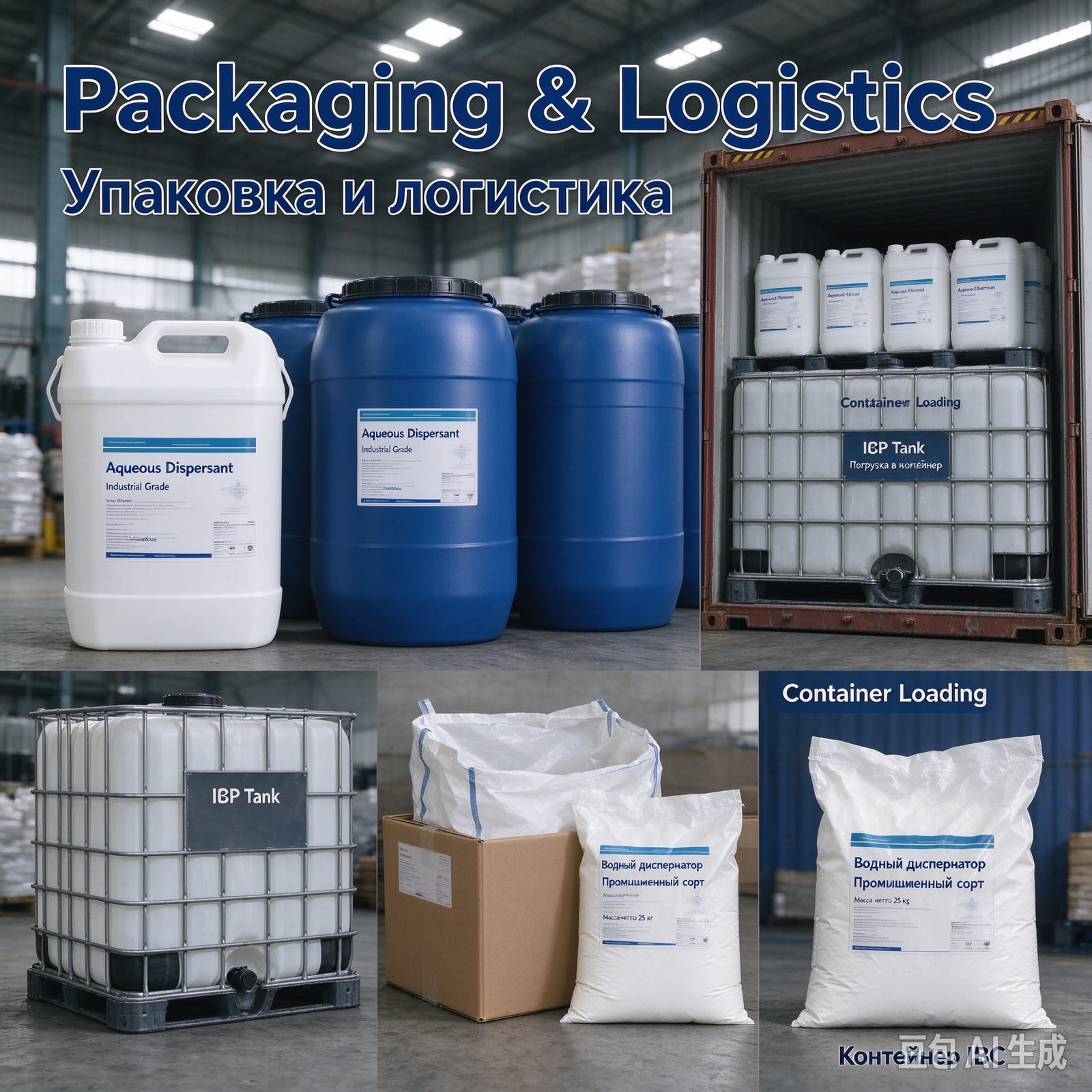
- Standard packing options: 25kg plastic drum, 200kg plastic drum, IBC tote tank. Pallet packing is available for sea shipment to avoid collision and leakage.
- Minimum bulk order quantity: 1 ton. Custom concentration and modified formula are acceptable if you have special dispersion or anti-foam requirements.
- Lead time: standard grades 5–7 working days; customized modified dispersant needs 12–18 working days for synthesis and inspection.
- Available documents: COA, TDS, MSDS, commercial invoice, packing list and certificate of origin for customs clearance.
- Special shipping reminder: this liquid product cannot be frozen during transportation. Notify us if your destination area is in low-temperature zone, we will add antifreeze protection for packaging.
USAGE NOTES
- Add the dispersant at the pre-dispersion stage before sand milling, together with water and wetting agent. Do not add it after grinding is finished.
- The recommended dosage is calculated based on pigment and filler weight. Excessive dosage will cause excessive foam, slow drying rate and reduced water resistance of final coating.
- Control mixing speed properly. High-speed stirring for a long time will introduce a large amount of air and bring foam problems.
- Compatible with most water-based resins, thickeners, defoamers and film-forming aids. But pre-mixing compatibility test is required when using new thickener systems.
- Storage temperature range: 5℃ ~ 35℃. Freezing will cause irreversible separation and performance failure. Do not heat directly.
- Stir evenly before use if slight stratification appears after long standing. Stratification does not mean product failure after uniform stirring.
- Avoid mixing with strong acid or strong alkaline raw materials, which will destroy the dispersion structure and reduce dispersion efficiency.
- Seal tightly after opening. Prevent dust and foreign impurities from entering the liquid.
COMMON FORMULAS
These reference formulas are weight percentage, only for laboratory testing. Adjust dosage according to your raw material difference and performance target.
| Formula 1: Architectural Latex Paint (DIS-A01 Anionic Dispersant) | |
|---|---|
| Water | 42.0% |
| Titanium dioxide + talc + calcium carbonate | 45.0% |
| DIS-A01 Water-based dispersant | 0.6% |
| Wetting agent, defoamer, thickener, film-forming aid | 12.4% |
| Formula 2: Water-based Gravure Ink (DIS-C03 Composite Dispersant) | |
|---|---|
| Water + water-based acrylic resin | 50.5% |
| Organic pigment | 35.0% |
| DIS-C03 Composite dispersant | 1.0% |
| Wetting agent, defoamer, leveling agent | 13.5% |
| Formula 3: Ceramic Body Slip (DIS-N02 Nonionic Dispersant) | |
|---|---|
| Kaolin, feldspar, quartz powder | 72.0% |
| Water | 27.2% |
| DIS-N02 Nonionic dispersant | 0.8% |
COMMON PROBLEMS IN DOWNSTREAM PRODUCTION
- Pigment sedimentation and hard settlement after storage: Insufficient dispersant dosage or wrong addition sequence. If dispersant is added after sand milling, pigment flocculation already occurs. Check adding point first, then increase dispersant dosage moderately.
- High slurry viscosity, difficult grinding: The selected dispersant grade does not match your pigment. Anionic dispersant performs poorly for some organic pigments. Switch to composite type and test again.
- Too many foams in grinding tank: Overdose of dispersant. Reduce dosage, or match low-foam dispersant grade. High stirring speed and excessive air entrainment will also aggravate foaming.
- Poor gloss of finished coating or ink: Dispersant destroys the arrangement of pigment particles. Too much dispersant will form an independent film layer, reduce gloss and influence leveling performance.
- Poor water resistance of cured coating film: Excess dispersant remains in the system. Dispersant is hydrophilic. Excess residual dispersant will form water-permeable channels inside the coating.
- Color difference between batches, unstable color strength: Inconsistent dispersant addition amount in each batch. Use quantitative feeding. Raw material fluctuation of pigments will also lead to color deviation.
- Flocculation after mixing with thickener: Electrolyte incompatibility between dispersant and thickener. Anionic dispersant may conflict with cationic thickener. Replace thickener or change to nonionic dispersant grade.
- Ceramic slip viscosity rises slowly after standing: Poor electrolyte resistance of dispersant. Ceramic raw materials contain soluble metal ions, which destroy electrostatic dispersion. Nonionic grade DIS-N02 is recommended.
- Poor freeze-thaw stability of color paste: Dispersant system cannot protect pigment particles under low temperature cycle. We can adjust the molecular weight of dispersant to improve freeze-thaw resistance.
- Coating surface shrinkage, pinholes: The dispersant affects surface tension coordination. Cooperate with wetting agent and defoamer to rebuild the surface formula balance.
Quick Conversion Calculator
Currency Exchange
Result: 0
Weight Conversion
Result: 0
Volume Conversion
Result: 0
Container Freight
Result: 0
Length Unit
Result: 0
Density Calculator
Result: 0
Price Per Ton
Result: 0
Packing Calculator
Result: 0
常见问题 FAQ
PRICE INFORMATION
- Quotation Basis: CMC price depends on product grade, viscosity, substitution degree, order quantity and delivery terms.
- Price Validity: All quotations are subject to market raw material fluctuation. Normally valid for 7 days unless otherwise specified.
- Price Contains: The quoted price covers product cost and standard export packaging. Freight, insurance and export charges are calculated separately according to Incoterms.
- Tax & Invoice: Commercial invoice for export will be provided. Relevant export tax formalities can be handled.
- Payment Discount: Better price can be offered for larger repeated orders. Please contact us for the latest formal quotation.
DELIVERY TIME & SHELF LIFE
- Production Lead Time: 7–15 working days after receiving your deposit, subject to factory production schedule.
- Shipping Arrangement: After production completion, we will book container and arrange shipment. Port space availability may affect the departure date.
- Transit Time: Sea transit time varies according to destination port, generally ranges from 15 to 45 days.
- Shelf Life: 24 months from production date when stored under proper dry and cool conditions with original sealed packaging.
- Storage Warning: Once the bag is opened, please consume as soon as possible and keep away from moisture, high temperature and direct sunlight.
PRODUCT QUALITY
- Raw Material Inspection: All raw materials are strictly inspected before entering production line to guarantee stable base quality.
- In-process Monitoring: Continuous online monitoring during production for viscosity, substitution degree and moisture content.
- Batch Test: Every finished batch will be sampled and tested before delivery. Qualified report will be provided together with shipment documents.
- Consistency Control: Automated production lines reduce batch difference, ensuring stable performance for repeated orders.
- Quality Support: We accept third-party inspection before shipment. Technical team offers after-sales technical support for quality related issues.
ABOUT US
- Headquartered in Shijiazhuang: Based in Shijiazhuang, Hebei, a globally influential fine chemical production hub with huge capacity and full industrial chain to ensure stable raw materials and bulk supply.
- Geographic Advantage: Convenient inland transport near Tianjin and Qingdao ports, supporting fast container shipment and competitive export logistics cost.
- Full-chain Supplier: One-stop provider of fine chemical additives and matching production equipment, custom service available beyond cellulose ethers.
- Technical Team: Professional team supplies formula consultation, sample testing and product selection for various industrial projects.
- Global Export: Years of export experience, providing reliable goods, full export documents and timely after-sales technical support.
相关产品及设备
USEFUL LINKS
- AIChE https://www.aiche.org/
- IChemE https://www.icheme.org/
- Cheresources https://www.cheresources.com/
- NIST Chemistry WebBook https://webbook.nist.gov/chemistry/
- AspenTech https://www.aspentech.com/
- DECHEMA https://www.dechema.de/en.html
- ChemEngPlanet https://www.chemengplanet.com/
- PubChem https://pubchem.ncbi.nlm.nih.gov/
- Chemical Processing https://www.chemicalprocessing.com/
- ChemIndustry https://www.chemindustry.com/
- PharmaChemEngineer https://www.pharmachemeng.com/
- GlobalSpec https://www.globalspec.com/